Thursday, January 23, 2014

Hyderabad Delight

New Year for me started on a travelling note, I had to travel to Hyderabad. And it was my maiden visit to the city. On 31st of December, I travelled to Delhi from where I had to board the train to Hyderabad. It was an early morning train and some 24 hours long journey. On the eleventh hour, some changes were made to the travelling plan. Someone who was supposed to accompany me on this travel couldn’t reach Delhi because of the weather, as no flights took off from the Sheikh-ul-Alam International Airport on that day. A friend who stays in Delhi after certain persuasion agreed to accompany.
Starting our travel on an early New Year morning was dampened with the arrival of Train Ticket Examiner (TTE), who while checking our identities said that the friend who was accompanying me on someone else’s ticket could not continue the journey. And only after putting a thousand rupee note in his pocket did he stop complaining. And while I thought the worst part was over, I soon realised that three more TTE’s would change before we would reach our destination. And the practice of greasing the hands of TTE’s continued with depreciation though. And it totally looked an all time thing for them; I have not ever in my life encountered such straight forwardness among corrupt officials.
Finally, on early 2nd January morning we reached Secunderabad Railway station, one of the three main railway stations in Hyderabad. When we got down the train, first thing we noticed was the cleanliness of the station. Having travelled from H Nizamudin Railway station to Secunderabad Railway station, this one looked more like the newly built metro station, with proper placement of things around. There is something about this city, so tired after some 25 hours of long journey, once in the city we felt fresh and relaxed. We went to the hotel, freshened up and started our tour.
Travelling from north which was caught up in cold weather and fog to the south where the sun was shining and temperature touching 30 degree’s, it was a blessing. Not only the weather but people were completely different, humble and hospitable. Right from the time when we got down the train, we felt the change.
The tour of course had to start from the Mecca Masjid, an oldest Masjid in Hyderabad and one of the biggest in India. Build by Sultan Muhammad Qutub Shah, from the bricks made from the soil brought from Mecca. Adjacent to Mecca Masjid is Char Minar, built by Sultan Muhammad Quli Qutb Shah in 1591, after he shifted his capital from Golconda to Hyderabad.
Char Minar is surrounded by old Delhi like markets, though unique in nature with a variety of products from bangles to pearls and embroidered suits to electronic items. It is a shopper’s paradise and you can buy a lot of things that connect the present to the past. Also, many famous Biryani eat outs are found in the market.
The must see places in Hyderabad also include Hussain Sagar Lake, Lumbini park and the Golconda fort. But, one place which needs special mention is Salar Jung Museum, one of the three National Museums in India located on the southern bank of Musi River. Among its collection of sculptures, paintings, carvings, textiles, manuscripts, ceramics, metallic artefacts, carpets, clocks, and furniture the Museum has a famous   Quran Collection from around the World in different fonts and designs. It also has many artefacts from Kashmir.
But the real beauty of Hyderabad does not come from these must see places but from the people, who are gentle and sober.  Hyderabad’s are a pretty friendly people and their attitude towards people is positive and helpful. All in all, it is a pleasant city.

Unforgettable Misery!

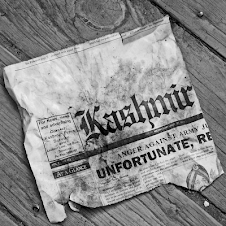
On the 10th of every month, a couple of hundred people come together in Partap Park, in the heart of Srinagar city. They are a mix of people from almost every nook and corner of the valley, brought together by a common misery. Behind the beauty of Kashmir’s snow clad mountains and the sparkling lakes, lies immense pain and despair of families who are unaware of the whereabouts of their loved ones. Together, the family members, young and old wait for their sons and father, brothers and husbands to arrive. Collectively, they sit and protest silently against one of the worst atrocities that have taken place at the hand of Indian armed forces.
Kashmir, with as much beauty, has a scarred soul.  As per the estimates of organisations working with these families, there are anywhere between eight thousand to ten thousand disappeared persons in the valley. They are the cases of enforced disappearances, where the so called security forces picked up these guys, irrespective of their connection to armed struggle. And they never returned, leaving their families in the state of despair and melancholy.
Among these thousands of families, there are around 2000 half widows in Kashmir. Half Widows are the women, who husbands have disappeared, and the whereabouts are not unknown, not even the information of them being alive or dead has been provided by the authorities. The plight of these families is indescribable. To imagine such pain is beyond imagination. All through these years of conflict in Kashmir, the suffering of these women has been infinite.
The life of these women is torn between running from pillar to post, to every Indian prison, meeting any official they can and to Partap Park on every 10th of the month to protest silently to get even a slightest clue about their loved ones. And this is not all: their children were also given the name half orphans, without being able to explain anything about their fathers is terrible. And these children caught up in the uncertainty of economical and social support being provided to them.
These women usually depend upon their families or on their in-laws to take care of their economical needs. And in many cases where the families think of them as an economical liability, they have to settle on their own. And to add to this, they in many cases are not given any property rights by their in laws and many a times are rendered homeless.
Even though very recently the Ulema have issued a fatwa saying that the women whose husbands have been missing can marry after waiting for four years, but not many of them actually do. Being caught between the social and economical support and their love and hope that one day their husbands might return, they usually choose otherwise.
The existence of unmarked graves, which were recently found, are fading the hope of life. More than 7000 of them were found and in one of the districts among more than 50 graves which were found, ninety percent were that of locals of a nearby village, who had disappeared in last two decades. This diminishes the hopes half widows and the half orphans, who have been waiting for long for their loved ones to return, so that they can restart their lives like any other normal family around the world and could get some respite from their sufferings.
These families of Kashmir have gone through extreme trauma. And there seems to be no end to their agony. Kashmir as a nation needs to rise to their pain and collectively share their sufferings.

Winter: Here to Stay

All around the world, winter as a season is understood differently depending upon the geographical situation of a state or nation. My idea of winter has been shaped by quarter a century of living in Kashmir valley, geographically positioned in Himalayas, with fertile lands and beautiful lakes is of cold, snow and chilling days.
Summers in Kashmir are pleasant while the winters are harsh. It sets in gradually and then peaks out. And the culmination of winters is the forty day period known as Chillai Kalaan which starts on 21st of December. This phenomenon repeats itself every year. And so did this year. With Kashmir already having had first snowfall of the season, streets have already turned icy. The long fur boots have hit the streets, which were banished to store rooms in summers. And for the next three months, we should accept the way it is now and not think of pleasant summer days.
We know it comes every year, at the same time each year, but that doesn’t stop us from complaining about the cold, and the snow, and the ice. Every year the temperature dips below zero degrees, freezing everything around including water taps, diesel cars and even the Dal Lake, making it an ice skating venue for kids. Snowfall is frequent in this period and has longer life. Everything is covered in a white snow blanket, a perfect photographic opportunity nowadays, when the social networking sites are flourishing with people sharing their lives online. It by all means is wonderful experience to have. I remember as a kid making snow bunkers, big enough for a couple of people to sit in and using icicles as rockets. Making snowman is one of the celebrated events of kids when it snows.
It kind of dumb founds me that people are surprised that it’s cold and snowy in Kashmir. That somehow the city and weather are conspiring against them. Its winter in Kashmir- it’s going to be cold. The chilly winter temperatures shouldn’t stop the fun and activities in Kashmir, winter should be enjoyable as the other seasons. Nothing makes Kashmir as beautiful as the white snow blanket all around. The silence of wintry nights and the chilling cold days makes one believe in the serenity of nature.
As the temperature dips, harissa — the ‘perfect and preferred breakfast’ — draws in crowds from old, urban areas of Kashmir. And the smell of cooking dried vegetables is mesmerising, another delicacy one gets to eat in winters.
None the less, there are problems also. One that the state remains cut of from the rest of the world owing to snowfall which halts and restricts the traffic on the only surface link to the rest of the world. And the non availability of electricity to the people who are in the dire need of the same all through the winters, and plunging the valley into era of darkness while being one of the largest electricity producing state.
There are various steps which need to be taken to improve the winter life in Kashmir. But the fact remains, winters brings us together in cold and shivering misery like nothing else. Ask any Kashmiri how we can stand to live here and deal with winter and we’ll likely say that we live for summer. It’s the very thought of summer in Kashmir that keeps us going all winter long.
In winters, Kashmir is left to destiny with the Darbar moving to the winter capital, Jammu. In order to set the house right, there is an immense need for the state government to reschedule the Darbar months. In the months of summer, Darbar should be in Jammu and in winters should be shifted to Srinagar. That’s when the administration is needed at those places and not the other way around.

Sunday, December 29, 2013

Crumbling Social Order

I am not sure how far defining Kashmir as “Peer Waer” is justified, but as long as I can remember I have always heard people saying this with utmost conviction. Every discussion would end on the same point, irrespective of the body of discussion, political, social and economical. People of Kashmir have always taken pride in belonging to the place which has also been known as Land of Saints. And why not, being bestowed with the immense natural beauty and serene environment Kashmir has been devoted to the religious wealth it has acquired through centuries.
The very fabric of the same society has been torn apart by the revelations which have come up in the recent past. While corruption is nothing new in this state but its intrusion into the fundamental blocks on which a society stands, has come as a shock.
It all started with few hundred deaths of infants, in the only pediatric hospital in Srinagar. With the committee’s formed and investigations done nothing concrete ever came up. People who were suspended were later re-instated at the same or higher positions. The blame game continued, till people remembered no more. The public memory in Kashmir, like other places is short term, where a hue and cry rises about an incident and then people forget about it, a complete blackout happens as nothing ever had happened. And, now the deaths have reduced, not because some serious cognizance has been taken about the unfortunate events that took place, but because less people visit the hospital now. Parents think hundred times before making the decision of going to the only paediatric hospital. This was later followed by a fake drug scam. Again something related to the health sector. The medicines containing chalk and clay were being fed to the patients in government hospitals as life saving drugs and other emergency medicines. Many a doctors attribute the deaths in paediatric hospital to this fake drug scam. And, who knows how many more deaths which happened in hospitals or at other places were because of these medicines. Not even considering, how many patients suffered pain because what they thought of as medication was clay and chalk, with no medicinal value at least to improve health.
As if this was not enough, a crude disclosure of self proclaimed dervish came to fore. He was arrested on the charges of rape. Exploiting young girls at his so called institution and making them believe that it is spiritual in nature. Could it get worse? Primarily, if these things happen anywhere, they are condemnable but someone who the society thinks is propagating a religion and its teachings, this is utter disgrace. Not only for the fake dervish, but for the people who trusted him with their sons and daughters. Also, the infamous CET paper leak scam, where allegedly the chairman of BOPEE is involved. In this case even the parents were involved in purchasing the entrance papers for their wards. Meritorious students were denied admission to the Medical College while the undeserving students indulged in corruption made it by means of buying the papers. And, tomorrow when they complete their degrees and practice medicine in hospitals, it probably would be a nightmare for patients.
Lately, Kashmir has so much been intertwined in corruption and its related activities not only economically but socially and spiritually as well, without realising where the society is headed. Ironically, these activities have placed fear and scare among the common man that they no longer trust the institutions and the individuals. And, how would they? There have been so many betrays, at all levels.
It’s high time that people wake up because the political class is already in deep slumber and they for the rest of the times to come would do nothing but form committees and order inquiries. We as a society have to decide if this is where we want to live or commit to memory the mistakes we have made and make sure that the culprits are punished and let our society grow on merit.